
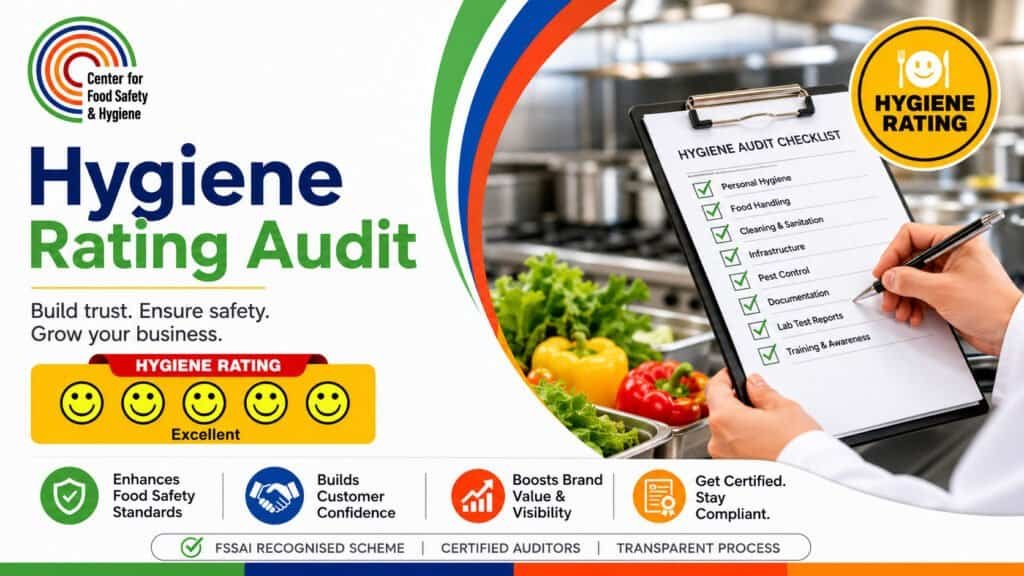
Food safety is a critical aspect of any food business. Third Party Auditing (TPA) helps food manufacturers demonstrate compliance with food safety regulations, strengthen operational controls, and build trust with customers and regulators.
What is a Third Party Audit?
A Third Party Audit (TPA) is an independent assessment conducted by an authorized auditing agency that has no direct involvement with the food business being audited. Third-Party Audits provide an unbiased evaluation of a facility’s compliance with food safety standards, regulatory requirements, and hygiene practices.
Key objectives:
- Verify compliance with food safety regulations
- Evaluate Good Manufacturing Practices (GMP)
- Assess Good Hygiene Practices (GHP)
- Review Food Safety Management Systems (FSMS)
- Identify non-conformities and improvement opportunities
- Improve consumer confidence
Third-party auditors examine processes, records, infrastructure, personnel practices, sanitation controls, traceability systems, and food safety management procedures.
What is the Process of Third Party Audit?
Step 1: Application and Audit Planning
The food business operator applies for the audit through an approved auditing agency. The audit scope, facility size, product category, and audit duration are determined.
Step 2: Preassessment Audit
A Preassessment Audit is strongly recommended before the official audit. This helps identify compliance gaps and allows corrective actions before the final assessment.
Common areas reviewed include:
- Personal hygiene practices
- Pest control systems
- Cleaning and sanitation programs
- Documentation records
- Water quality monitoring
- Equipment maintenance
- Training records
Step 3: Opening Meeting
The auditor discusses the :
- Audit objectives
- Scope of assessment
- Audit schedule
- Departments covered
Step 4: Facility Inspection
The auditor conducts a detailed inspection of:
- Raw material receiving
- Storage areas
- Production sections
- Packaging operations
- Utility systems
- Warehouses
- Employee facilities
Step 5: Document Verification
Records reviewed may include:
- Internal audits
- Calibration records
- Water analysis reports
- Pest control reports
- Medical fitness records
- Training records
- Traceability exercises
- Recall procedures
Step 6: Identification of Non-Conformities
Any deviations are categorized and documented.
Step 7: Closing Meeting
Findings and corrective action requirements are discussed.
Step 8: Corrective Action Submission
The organization submits evidence of corrective actions for review.
Step 9: Audit Certification/Rating
Once compliance is verified, the audit report and rating are issued.
Is Third Party Audit a Mandatory Requirement?
The requirement for Third Party Auditing depends on regulatory obligations and customer requirements.
In many cases, food businesses undergo audits because:
- Regulatory authorities require compliance verification.
- Corporate customers demand supplier audits.
- Export markets require certification.
- Food safety standards mandate independent assessments.
For several high-risk food categories, third-party audits are increasingly becoming an industry expectation rather than an optional activity.
Who Requires TPA (Third Party Audit):
Food Manufacturing Units
Dairy Processing Plants
Packaged Drinking Water Manufacturing Unit
Industrial and Institutional Caterers
Export-Oriented Food Business.
How Many Times Should I Do a Third Party Audit?
The frequency of audits depends on:
- Regulatory requirements
- Customer expectations
- Risk category of products
- Previous audit performance
Many organizations perform:
- One annual Third Party Audit
- One internal audit every six months
- Periodic Preassessment Audits
This approach helps maintain continuous compliance.
Consequences of Non-Compliance
Failure to comply with Third Party Audit requirements may result in:
- Loss of business opportunities
- Customer complaints
- Reduced supplier approval ratings
- Regulatory scrutiny
- Product recalls
- Increased food safety risks
- Contract cancellations
Repeated non-compliances may significantly impact brand reputation and market credibility.
Eligibility Criteria for Third Party Audit
Organizations seeking Third Party Auditing should ensure:
Basic Infrastructure Compliance
- Hygienic facility design
- Adequate lighting and ventilation
- Pest-proof environment
- Proper waste management
Food Safety Management System
- Documented procedures
- Hazard analysis
- Monitoring records
- Corrective action system
Personnel Hygiene Controls
- Medical fitness records
- Hygiene training
- Protective clothing usage
Operational Controls
- Traceability system
- Recall procedure
- Calibration program
- Supplier approval process
Facilities meeting these requirements generally achieve better audit outcomes.
Conclusion
Third Party Auditing is more than a compliance requirement—it is a valuable tool for improving food safety, operational efficiency, and customer trust. Regular audits help organizations identify risks early, strengthen food safety culture, and maintain long-term business credibility.
Need Third Party Audit Support?
Our team can assist with Preassessment Audits, Gap Assessments, Food Safety Compliance Reviews, and Third Party Audit preparation to help your facility achieve successful audit outcomes.
Frequently Asked Questions (FAQs)
1. What is the difference between a Third Party Audit and an Internal Audit?
An Internal Audit is conducted by the organization itself, while a Third Party Audit is conducted by an independent external auditing agency.
2. Is a Preassessment Audit mandatory?
No. However, it is highly recommended because it helps identify compliance gaps before the official audit.
3. How long does a Third Party Audit take?
Most audits take between 1 and 5 audit days depending on facility size and complexity.
4. Can a facility fail a Third Party Audit?
Yes. Significant non-conformities related to food safety, hygiene, documentation, or regulatory compliance may lead to audit failure or poor ratings.
5. How can I prepare for a Food Safety Audit?
Maintain updated records, conduct internal audits, ensure personnel hygiene compliance, verify sanitation programs, and perform a Preassessment Audit before the official assessment.